
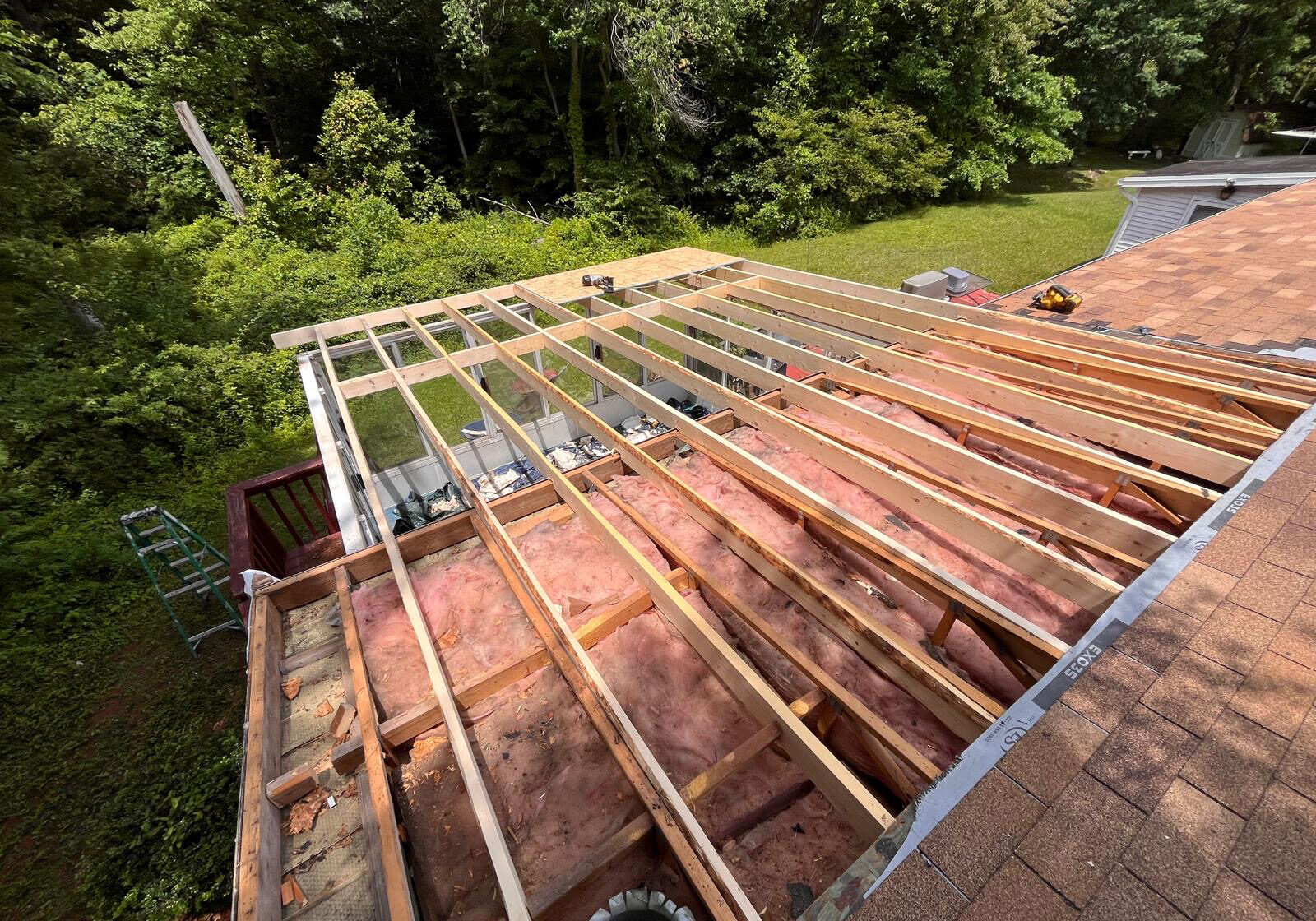
The visible part of your roof—shingles, gutters, flashing—only tells half the story. Beneath those shingles, two critical waterproofing layers determine whether your attic stays dry for 20 years or starts leaking in five. Yet many contractors treat roof underlayment and ice and water shield as optional add-ons instead of standard protection.
Understanding the difference between these two layers—and why quality roof replacements include both—helps you make informed decisions. You'll recognize which contractors truly deliver comprehensive protection.
We'll break down what each layer does and where they go on your roof. You'll learn why Maryland homes need both, what warning signs to watch for, and which questions to ask when evaluating contractor proposals. Whether you're replacing your roof soon or planning ahead, this knowledge protects your investment.
What is the purpose of roof underlayment and ice and water shield?
Roof underlayment and ice and water shield serve as your roof's waterproof defense system beneath the shingles:
Roof underlayment is a water-resistant barrier installed across the entire roof deck. It protects against:
- Wind-driven rain that gets under shingles
- Minor leaks while shingles are being replaced
- Moisture from condensation in the attic
Ice and water shield is a rubberized, self-adhesive membrane installed in high-risk areas. It provides extra protection against:
- Ice dams along roof edges and valleys
- Leaks around chimneys, skylights, and vents
- Severe weather that overwhelms standard underlayment
Maryland building codes require ice and water shield at eaves, valleys, and penetrations. Quality contractors install both layers as standard practice during roof replacement—not as optional upgrades.
Learn more about how the replacement process works in Harford County.
What Roof Underlayment Does (And What It Doesn't)
Before we explain why both layers matter, let's start with the basics: what exactly is roof underlayment, and what should you expect it to do?
Roof underlayment is a water-resistant barrier installed directly on your roof deck before shingles go down. Think of it as a safety net that catches water if shingles get damaged or blown off. It covers your entire roof in overlapping rows, creating a secondary line of defense.
Here's what matters: underlayment is water-resistant, not waterproof. It buys you time if shingles fail, but it won't protect your home forever on its own. You still need shingles on top to create a complete roofing system.
You'll encounter two main types when getting quotes:
Asphalt-saturated felt (traditional)
- Usually labeled #15 or #30 weight
- Lasts 12-20 years before breaking down
- Tears more easily during installation
- Lower upfront cost but shorter lifespan
Synthetic underlayment (modern standard)
- Lasts 25-30+ years without degrading
- Resists tearing and stays flat during installation
- Costs $0.15-$0.35 more per square foot
- Better protection over the life of your roof
During roof replacements in Harford County, we've seen 15-year-old felt underlayment deteriorate while synthetic from the same era looks brand new. The $200-400 upfront difference pays off in longevity—especially when your roof needs to handle Maryland's weather for decades.
Why Ice and Water Shield Goes Beyond Standard Underlayment
Underlayment protects your entire roof, but certain areas face much higher risk. Ice and water shield targets those vulnerable zones with waterproof protection.
Maryland building codes require ice and water shield in specific locations:
- Roof edges (eaves): At least 2-3 feet up from the edge
- Valleys: Where two roof slopes meet and water concentrates
- Sidewalls: Where roof meets vertical walls
- Penetrations: Around chimneys, skylights, vents, and plumbing stacks
Why these specific areas? Maryland's freeze-thaw cycles create ice dams at roof edges. Snow melts during the day, runs down to the cold eave, and refreezes. Ice builds up and forces water back under your shingles. Regular underlayment can't stop this backup—but ice and water shield's waterproof seal can.
Valleys concentrate water flow from two roof slopes. Penetrations create entry points where flashing alone isn't enough. These are the spots where water backs up, pools, or finds its way in. Ice and water shield uses self-adhesive, rubberized material that seals completely—even around nail holes and flashing edges.
On your main roof slopes, water runs off quickly. Underlayment handles those areas fine because shingles shed water fast and nothing backs up. But at eaves, valleys, and penetrations, water moves slowly or pools. That's where you need waterproof protection, not just water-resistant.
Installing ice and water shield adds $150-400 to your roof replacement cost. Skipping it can cost $3,000-8,000 in water damage repairs after one bad winter.
We've responded to emergency calls from homeowners whose roofers skipped ice and water shield in valleys. After one winter, they're dealing with ceiling stains and mold—repairs that cost triple what the ice and water shield would have.
Do You Need Both? When Underlayment and Ice & Water Shield Work Together
Now that you understand what makes ice and water shield different, the natural question is: do you really need to pay for both?
Yes. Here's why one doesn't replace the other.
Your roofer installs ice and water shield first in vulnerable zones—eaves, valleys, and around penetrations. Then underlayment goes over the entire roof deck, including over the ice and water shield in some areas. This layering strategy gives you targeted waterproof protection where you need it most, plus water-resistant coverage everywhere else.
You might wonder: why not just use ice and water shield everywhere? Cost. Covering an entire roof with ice and water shield would add $1,500-3,000 to your project. It's overkill for the middle of your roof slopes where water runs off quickly. The exception: very low-pitch roofs or homes in extreme weather zones sometimes benefit from full coverage.
What about using only underlayment? That's not adequate either. Underlayment alone won't stop ice dams or seal around penetrations. You're also risking your shingle warranty—most manufacturers require proper ice and water shield installation per building code. Skip it, and you might void your coverage.
Here's how the scenarios compare:
| Scenario | Risk Level | Cost | Protection Duration | Best for |
|---|---|---|---|---|
| Underlayment Only | Medium-High | Lowest | Limited | Not recommended |
| Ice & Water Shield Only | High (incomplete coverage) | Medium | Excellent in covered areas only | Specialized applications only |
| Both Layers (Recommended) | Low | Highest but most protective | Comprehensive | All residential roofs |
Skipping underlayment exposes your roof deck the moment shingles fail. Skipping ice and water shield leaves you vulnerable to Maryland's winter ice dams and leak-prone penetrations. Both layers work together—neither replaces the other.
Signs Your Current Roof is Missing Proper Underlayment or Ice & Water Shield
If you've spotted any of these warning signs, your next step is finding a contractor who won't cut corners. Here's how to make sure you're getting quality work:
But first, how do you know if your current roof has these protection layers? Here are seven warning signs to watch for:
7 Warning Signs Your Roof May Be Missing Critical Protection Layers:
- Water stains on ceilings near roof edges — especially after heavy rain or snow melt
- Ice dams forming in the same spots every winter — icicles hanging from your eaves or gutters
- Leaks that appear quickly after storm damage — missing a few shingles shouldn't cause immediate attic leaks
- Attic moisture, mold, or musty smells — signs water is getting through
- Your roof is 15+ years old — likely has degrading felt underlayment instead of synthetic
- Darkening or water stains on roof deck boards — visible from inside your attic
- Recurring leaks around chimneys or skylights — suggests missing ice and water shield at penetrations
If you're comfortable going into your attic, look at the underside of your roof deck. Dark spots, water stains, or visible deterioration tell you water is getting through.
During our free roof inspections in Forest Hill and Bel Air, we check attic ventilation and look for underlayment deterioration—common in homes built before synthetic materials became standard. Schedule your free inspection today.
What to Ask Your Roofing Contractor About Underlayment and Ice & Water Shield
When it's time to replace your roof, the right questions help you identify quality contractors and avoid low-ball quotes that skip critical materials.
Arm yourself with these questions before signing any contract:
5 Questions Every Maryland Homeowner Should Ask Before Signing a Roof Replacement Contract:
- What brand and type of underlayment will you install? — You want to hear "synthetic" not "felt." Ask for the specific brand.
- Where exactly will ice and water shield be applied, and how many linear feet? — Should include eaves (minimum 2-3 feet up), all valleys, and around every penetration.
- Are both materials included in the base price or charged separately? — Both should be standard, not optional upgrades.
- Can you provide written specifications that detail all roofing materials? — Get everything in writing with brand names and coverage areas.
- What warranties cover the underlayment and ice and water shield installation? — Quality contractors stand behind their work.
Watch for these red flags in quotes: no mention of underlayment type, ice and water shield listed as "available for extra fee," or prices significantly lower than other estimates. An unusually low price often means cut corners.
Cutting $300 in materials might save money today. But it can cost you $5,000 or more in repairs within five years. Quality materials installed correctly protect your investment.
Local expertise matters too. Contractors familiar with Maryland weather know where protection is critical. They've seen what happens when corners get cut—and they won't let it happen to your home.
Protecting Your Investment
Roof underlayment and ice and water shield serve different but equally critical functions. Underlayment provides water-resistant protection across your entire roof. Ice and water shield adds targeted waterproof defense where Maryland's freeze-thaw cycles and concentrated water flow create the highest risk. These weather patterns are part of the broader roofing challenges in Harford County MD that every homeowner should understand before replacing a roof.
Understanding these components helps you evaluate contractor proposals with confidence. You can spot quality work and recognize when quotes skip essential protection. Maryland's weather makes both layers necessary—not optional extras.
Whether you're planning a replacement soon or just learning for the future, this knowledge protects your investment. You'll make informed decisions and choose contractors who deliver comprehensive protection.