
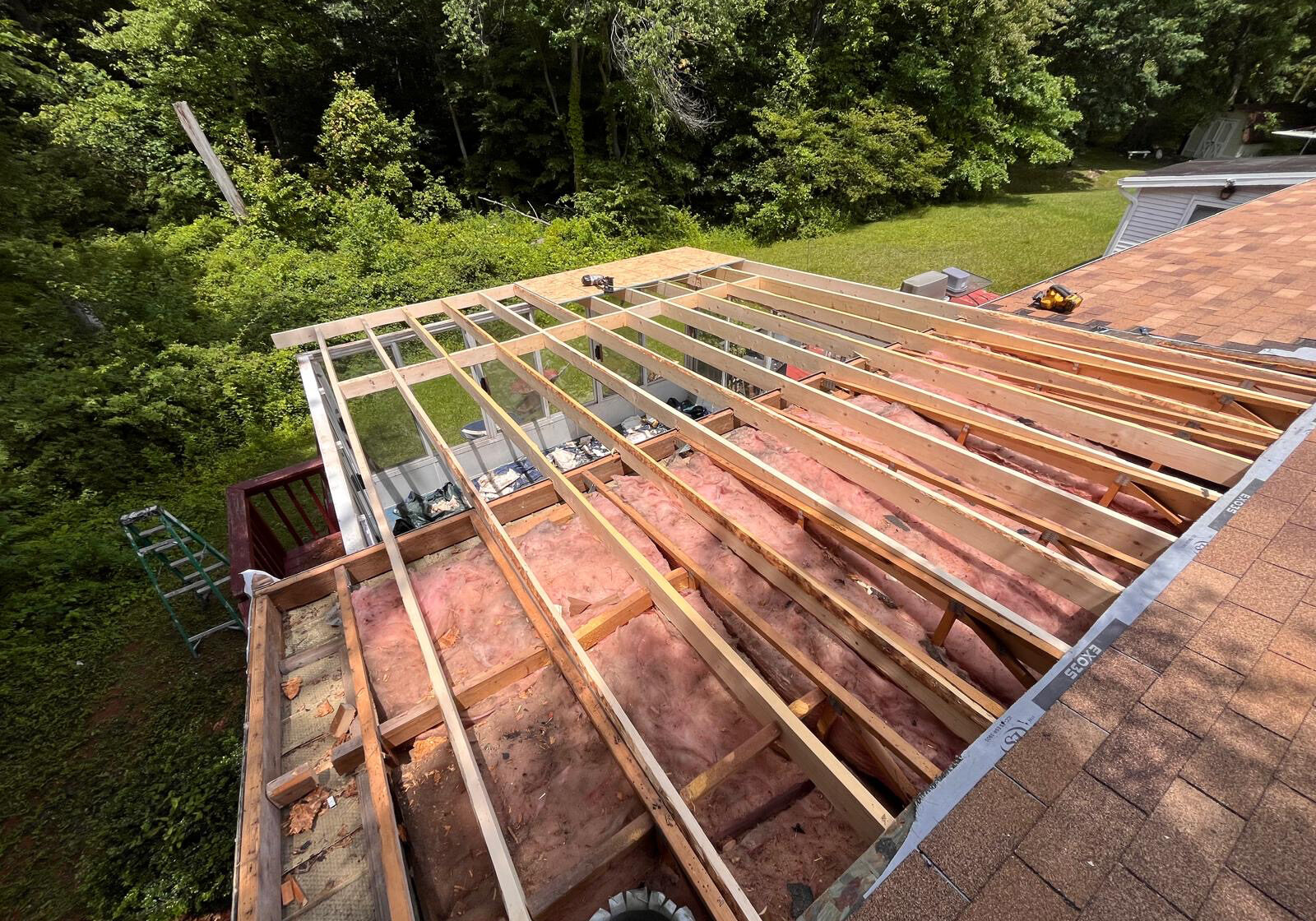
Krause Companies has served Forest Hill, Bel Air, and Harford County for over 20 years. We've inspected thousands of local roofs and seen how Maryland's harsh climate affects homes in Fallston, Churchville, and throughout the area.
This guide covers seven common roofing challenges every Harford County homeowner should know. You'll learn the warning signs to watch for, how each problem develops, and when to call a professional. Whether your roof is 5 years old or 25, these insights help you protect your biggest investment.
What are the most common roofing challenges in Harford County MD?
Harford County roofs face seven primary challenges driven by Maryland's harsh climate:
- Freeze-thaw cycles – 40+ cycles per winter cause shingle cracking and ice dam formation
- Severe storm damage – High winds (60+ mph) and hail lift or crack shingles
- Persistent moisture – Heavy rain and humidity lead to algae growth and wood rot
- Temperature extremes – Asphalt shingles expand and contract, stressing fasteners and seals
- Aging roofs – Most local homes have 15–25-year-old roofs nearing replacement
- Poor installation – Shortcuts during installation accelerate failure
- Flashing failures – Gaps around chimneys and vents allow rapid water intrusion
Regular inspections and quality materials extend roof lifespan despite these challenges.
Is your roof showing signs of these challenges? Explore roof replacement options for Harford County homes.
Maryland’s Freeze-Thaw Cycles: The Silent Roof Killer
Harford County experiences 40+ freeze-thaw cycles every winter. Temperatures drop below freezing overnight, then rise above 32°F during the day. This constant cycling creates serious damage over time.
Here's how it works: Water seeps into tiny cracks in your shingles or under flashing. When temperatures drop, that water freezes and expands. The expansion widens cracks and pushes shingles apart. When it thaws, more water enters the newly opened gaps. The cycle repeats dozens of times each winter.
Ice dams form when snow melts on your roof and refreezes at the eaves. This happens on many Forest Hill homes, especially those with north-facing slopes or inadequate attic insulation. The ice blocks proper drainage and forces water under your shingles.
After major freezes, we inspect attics for water stains on the decking and moisture around penetrations. These signs appear before you see ceiling damage inside your home.
Warning signs to watch for:
- Shingle edges curling upward after winter
- Granules collecting in gutters after thaw periods
- Ceiling stains appearing in spring
- Soft spots or sagging in your roof line
Freeze-Thaw Damage Risk by Roof Age:
| Roof Age | Risk Level | What to Do |
|---|---|---|
| 0–10 years | Minimal | Annual inspection |
| 10–15 years | Moderate | Inspect after major freezes |
| 15+ years | High | Plan for replacement |
If your roof is over 15 years old and showing freeze-thaw damage, roof replacement may be more cost-effective than ongoing repairs.
While freeze-thaw damage happens slowly over winter, the next challenge can strike in a single afternoon.
Storm Damage From High Winds and Hail: What Harford County Homeowners Need to Know
Harford County sees severe thunderstorms throughout spring and summer. Occasional tropical systems bring additional wind and rain in late summer and fall. These storms generate winds exceeding 60 mph, strong enough to lift shingles and tear flashing loose.
High winds create immediate damage. They lift shingle edges, break the seal between layers, and expose your roof deck to water. Wind-driven rain then enters through these openings. Damaged flashing around chimneys and vents creates entry points that lead to interior leaks.
Hail damage looks different depending on severity. Light hail creates bruising—soft spots where the impact compressed the shingle. Heavy hail cracks shingles completely. Bruising may seem cosmetic, but it accelerates deterioration. Cracked shingles need immediate replacement.
You can check for visible damage from ground level after a storm. Use binoculars to inspect safely without climbing.
5 Things to Check After a Storm:
- Gutters for dented metal or shingle granules
- Ground around your home for shingle pieces or debris
- Visible shingles for lifted edges or missing sections
- Flashing around chimneys for gaps or damage
- Attic for new water stains or moisture
Document everything with photos. Note the date and time. Save any shingle pieces you find. This information helps with insurance claims if you need to file.
Get a professional inspection within a few days of major storms. Insurance companies have filing deadlines. Severe storm damage often signals it's time for full roof replacement rather than patchwork repairs.
Moisture, Mold, and Algae: The Dark Side of Maryland Humidity
Maryland summers bring high humidity levels that stress roofing materials. This moisture combines with warm temperatures to create perfect conditions for organic growth on your roof.
Black streaks running down shingles are usually algae or cyanobacteria. These organisms feed on the limestone filler in asphalt shingles. They look cosmetic at first, but they hold moisture against your roof surface. This accelerates shingle deterioration.
Moss appears as green, fuzzy growth. It grows thicker than algae and lifts shingle edges as it spreads. Mold appears as dark patches and indicates moisture problems in your roof deck or attic.
We inspected a Bel Air home where the owner thought black streaks were just appearance issues. Our inspection revealed underlayment moisture damage underneath. The algae had held water against the shingles for years.
Attic ventilation plays a key role in preventing moisture buildup. Proper airflow keeps your attic temperature closer to outside temperature. This reduces condensation that damages your roof deck from below.
Prevention measures that work:
- Install zinc or copper strips at the roof peak to prevent algae growth
- Ensure adequate attic ventilation with soffit and ridge vents
- Trim tree branches to increase sunlight exposure
- Clean existing growth in early spring before temperatures rise
- Address ventilation issues before they cause deck damage
Moisture problems compound other roofing challenges. They make freeze-thaw damage worse and accelerate aging in already-stressed shingles.
Temperature Swings and Asphalt Shingle Stress
Harford County temperatures swing from below freezing in winter to 90°F or higher in summer. Asphalt shingles expand when hot and contract when cold. This constant movement creates stress over time.
Each expansion and contraction cycle weakens the nail connections. Nails pull through shingle material gradually. The adhesive seal between shingle layers fails. These small failures accumulate over years until shingles lift in wind or crack from brittleness.
South-facing and west-facing slopes age faster in our area. They receive more direct sunlight and reach higher temperatures. You'll often see these slopes need replacement years before north-facing sections of the same roof.
Material quality makes a difference in thermal performance. Three-tab shingles are thinner and more vulnerable to temperature stress. Architectural shingles have better dimensional stability and hold up longer under Maryland's temperature swings.
Most asphalt shingles last 15–25 years in Maryland's climate. Premium architectural shingles reach the higher end of that range. Basic three-tab shingles often fail closer to 15 years.
Shingle Type Comparison for Harford County:
| Shingle Type | Expected Lifespan | Thermal Performance | Best for |
|---|---|---|---|
| 3-Tab Asphalt Shingles | 15–20 years | Standard | Budget-conscious projects |
| Architectural Shingles | 20–25 years | Better | Most homes |
| Premium Architectural Shingles | 25–30 years | Best | Long-term value |
Aging Roofs in Forest Hill: When ‘Normal Wear’ Becomes a Problem
Many Harford County homes were built during the 1990s and 2000s housing boom. Those roofs are now 20–30 years old. They're reaching the end of their expected lifespan.
Granule loss is the clearest sign your roof is aging out. New shingles have a thick coating of colored granules. These protect the asphalt from UV damage. As shingles age, granules wash into gutters with every rain. Advanced granule loss leaves dark patches where the asphalt backing shows through.
Check your gutters after heavy rain. A handful of granules is normal. Cups full of granules mean your shingles are failing.
Curling happens when shingle edges lift upward. Cupping means the center of the shingle sinks while edges stay flat. Both indicate the shingle has lost flexibility. Brittle shingles crack easily and can't seal properly. These are end-of-life indicators.
Proactive replacement costs less than emergency repairs. A planned replacement lets you choose materials and timing. Emergency repairs during active leaks cost more and often require multiple service calls. Insurance companies may refuse coverage or charge higher premiums for roofs over 20 years old.
Should You Repair or Replace Your Harford County Roof?
Consider repair if:
- Your roof is under 15 years old
- Damage is isolated to one area
- A single storm caused the problem
- Budget requires a temporary solution
Consider replacement if:
- Your roof is 20+ years old
- Multiple problem areas exist across the roof
- Widespread granule loss is visible
- You've had recurring leaks
- You're planning to sell within 5 years
For most Harford County homes with roofs over 20 years old, full roof replacement provides better long-term value than ongoing repairs. Modern roofing materials offer 25-30+ year lifespans, improved energy efficiency, and better storm resistance.
Age-Based Action Plan:
| Roof Age | Recommended Action |
|---|---|
| 0–10 years | Annual monitoring and maintenance |
| 10–15 years | Begin planning and budgeting |
| 15–20 years | Get inspection, prepare for replacement |
| 20+ years | Replace procatively to avoid emergency |
Not sure which makes sense for your situation? Request your free roof replacement consultation to get expert guidance.
Poor Installation and Contractor Shortcuts: How to Avoid Them
Quality materials fail early when installed incorrectly. We've seen expensive shingles fail in 10 years because of installation shortcuts. Poor workmanship costs homeowners thousands in premature replacement.
Common installation mistakes in Maryland include inadequate underlayment that doesn't protect against ice dams. Improper flashing allows water entry at vulnerable points. Wrong nail placement or using too few nails lets wind lift shingles. Poor ventilation traps heat and moisture, accelerating deterioration from inside.
These shortcuts aren't always visible during installation. Problems appear years later when the warranty period has ended. By then, the contractor may be out of business or refuse responsibility.
Red flags to watch for include extremely low bids that seem too good to be true. Contractors with no local references or online reviews are risky. Unlicensed or uninsured contractors leave you liable for accidents. High-pressure tactics and demands for large upfront payments signal problems.
With over 20 years serving Forest Hill homeowners, we've seen how poor installation leads to premature failure. Our process includes proper underlayment installation, code-compliant flashing at all penetrations, and correct nail placement on every shingle.
7 Questions to Ask Before Hiring a Harford County Roofer:
- Are you licensed and insured in Maryland?
- Can you provide local references from the past year?
- How long have you operated in Harford County?
- What warranty covers materials and workmanship?
- Will you handle permits and inspections?
- Do you use your own crews or subcontractors?
- What's your process for protecting my property during work?
Look for contractors who answer these questions directly. Licensed Maryland contractors, local experience, and comprehensive service capabilities indicate a reliable choice.
Flashing Failures: The #1 Leak Entry Point
Flashing is thin metal that seals joints where your roof meets vertical surfaces. It protects the most vulnerable spots on your roof. When flashing fails, water enters quickly and causes significant damage.
Properly installed flashing creates a waterproof barrier at chimneys, skylights, roof valleys, plumbing vents, and where your roof meets exterior walls. Each location requires specific flashing techniques. Shortcuts at any of these spots lead to leaks.
Improper installation is common. Some contractors use caulk instead of proper step flashing. Caulk dries out and cracks within a few years. It's a temporary fix that fails fast. Proper flashing involves metal pieces that overlap and direct water away from vulnerable areas.
Maryland's humid climate corrodes metal flashing over time. Galvanized steel flashing rusts. Aluminum develops pinholes. Copper lasts longest but costs more. Corrosion creates gaps where water flows through.
You can check flashing condition from the ground with binoculars. Look for visible gaps between flashing and the surface it protects. Rust stains indicate corrosion. Lifted edges mean the seal has failed.
5 Critical Flashing Locations on Your Roof:
- Chimney base and cap
- Skylight perimeter
- Roof valleys where two slopes meet
- Plumbing vent pipes
- Step flashing where roof meets siding
Widespread flashing failure often indicates it's time for complete roof replacement with properly installed flashing systems. Replacing flashing alone only works if the surrounding shingles are in good condition.
When to Call a Professional Roofer in Harford County
You can perform basic inspections from the ground using binoculars. Check for obvious damage after storms. Look for missing shingles or debris in gutters. These visual checks help you spot immediate problems.
Professional inspections go deeper. A qualified roofer walks your roof safely and checks conditions you can't see from below. We examine flashing seals, check shingle attachment, inspect underlayment at edges, and look for soft spots indicating deck damage. We also inspect your attic for moisture, ventilation issues, and structural concerns.
Should I Call a Roofer?
Call immediately if you notice:
- Active leaks or water stains spreading on ceilings
- Extensive granule loss with backing visible on shingles
- Visible sagging or dipping in your roof line
- Multiple shingles missing after a storm
- Daylight visible through roof boards in your attic
Schedule an inspection soon if you see:
- Your roof is 15+ years old
- Black streaks or moss growth covering large areas
- Curling or cupping on multiple shingles
- Cracked or damaged flashing
- You're planning to sell your home
Bi-annual inspections catch problems early. Schedule one in spring after freeze-thaw damage and again in fall before winter arrives. These timing windows work best for Maryland's climate.
As a locally-owned Harford County contractor, we understand how Maryland weather impacts roofing materials. We've seen how freeze-thaw cycles, humidity, and storms affect homes throughout Forest Hill, Bel Air, and surrounding areas.
Don't wait until it's an emergency. Schedule your roof replacement estimate while you can plan the project on your terms.
Protecting Your Harford County Roof: Maintenance Tips That Actually Work
Regular maintenance extends your roof's lifespan. These steps help you catch small problems before they become expensive repairs.
Clean your gutters at minimum twice per year—spring and fall. If you have trees near your home, clean them more often. Clogged gutters cause water to back up under shingles. This leads to rot and leaks.
Trim branches that hang over your roof. Falling branches cause damage during storms. Overhanging limbs drop leaves and debris that trap moisture. Shade from branches creates conditions where moss and algae thrive.
Check your attic ventilation annually. Signs of inadequate ventilation include excessive heat in summer, frost on rafters in winter, and musty odors. Poor ventilation shortens your roof's life from the inside.
Schedule inspections at the right times for Maryland's climate. Spring inspections catch freeze-thaw damage. Fall inspections prepare your roof for winter. These timing windows help you address issues before weather makes them worse.
Keep detailed records. Save inspection reports, repair invoices, and warranty documents. These records help with insurance claims and show maintenance history when you sell your home.
Even with excellent maintenance, most asphalt roofs need replacement after 20-25 years in Maryland's climate. Maintenance extends lifespan but doesn't prevent normal aging.
Seasonal Maintenance Checklist for Harford County Homeowners:
- Spring: Clean gutters, inspect for winter damage, check flashing
- Summer: Trim branches, check for algae growth, verify attic ventilation
- Fall: Clean gutters again, inspect before winter, clear debris
- Winter: Watch for ice dams, check attic for moisture after storms