
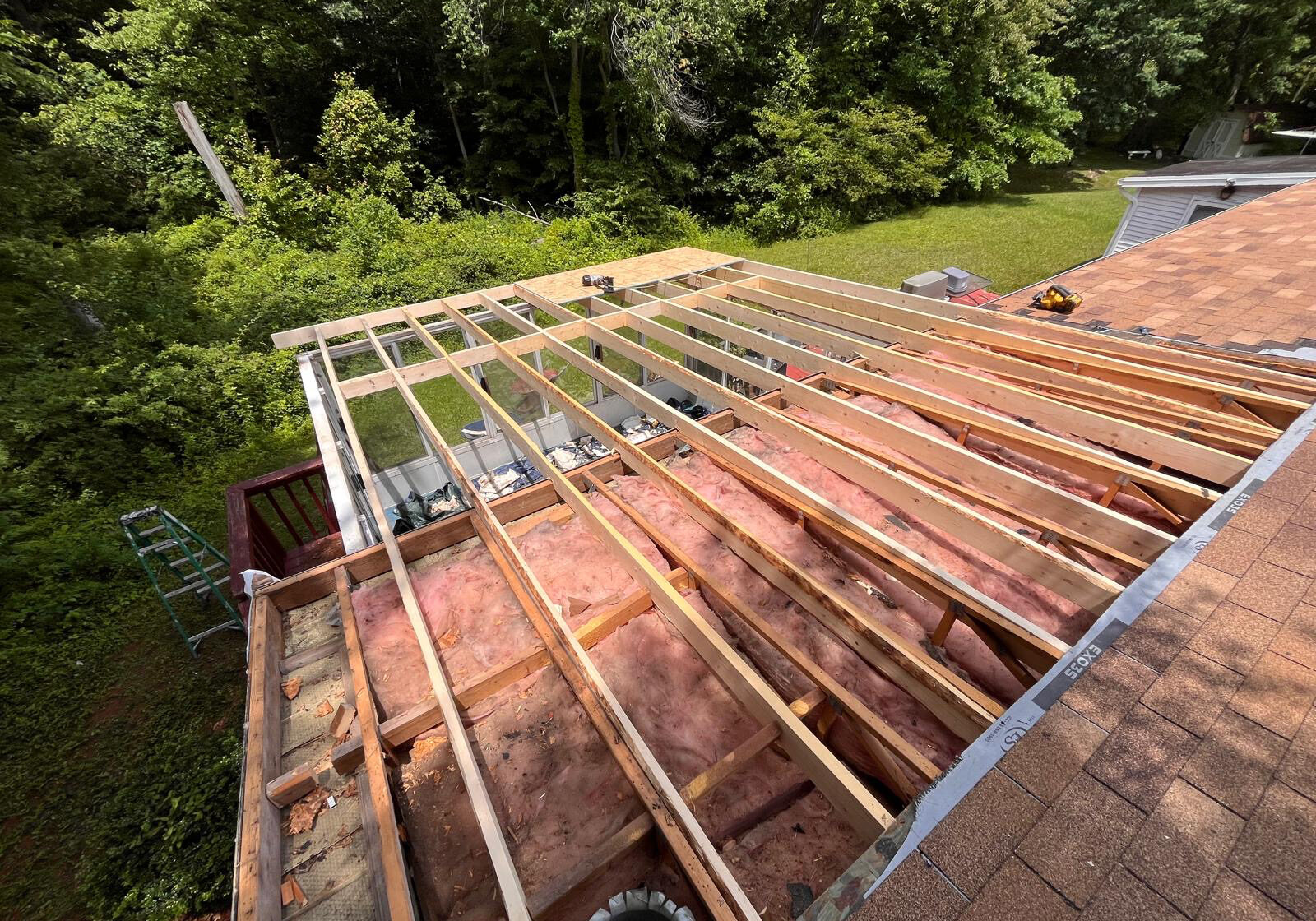
This guide walks you through the most common roof replacement mistakes Harford County homeowners make, plus practical steps to protect your investment and find a contractor you can trust.
We'll cover contractor red flags, material and timing decisions, insurance considerations, and inspection essentials—plus what professional service actually looks like so you know exactly what to expect.
Harford County homeowners in Forest Hill, Bel Air, Fallston, and surrounding areas face unique challenges: storm exposure from nor'easters and pressure to decide quickly after weather damage. You need clear information to navigate this process confidently—and that starts with knowing what mistakes to avoid.
What are the most common mistakes homeowners make when replacing a roof?
- The most common roof replacement mistakes include:
- Hiring unqualified contractors – Skipping license and insurance verification or falling for "storm chasers" often leads to shoddy work and voided warranties.
- Choosing materials based on price alone – The cheapest shingles may save money upfront but fail years earlier, costing more long-term.
- Ignoring insurance deadlines – Waiting too long to file a storm damage claim can mean paying out-of-pocket for covered repairs.
- Skipping the inspection process – Not assessing underlying deck damage before installation leads to premature failure.
- Accepting verbal estimates – Without detailed written contracts, you're vulnerable to surprise charges and scope disputes.
- Timing the project poorly – Scheduling during rainy season or extreme heat can compromise installation quality.
Avoiding these mistakes starts with choosing a licensed, local contractor who provides transparent estimates and backs their work with solid warranties.
Not ready to commit? Start with a free, no-pressure roof inspection to understand your options and timeline.
Mistake #1: Hiring a Roofing Contractor Without Proper Vetting
Verifying a contractor's license and insurance protects you from liability if someone gets hurt on your property. It ensures warranty validity and confirms they follow Maryland building codes. Without proper credentials, you have no recourse when work fails.
Check any contractor's Maryland Home Improvement Commission (MHIC) license status at MHIC.dllr.maryland.gov. Enter their business name or license number—it takes two minutes. Maryland requires MHIC licensing for any home improvement project over $500.
Watch for these red flags that signal trouble:
- High-pressure tactics like “sign today or lose this price”
- Cash-only demands or requests for 100% payment upfront
- No verifiable local business address or just a P.O. box
- Won't provide written contract or references from recent local jobs
- Out-of-state “storm chasers” appearing after weather events
Storm chasers knock on doors right after hail or wind damage. They collect deposits and disappear, leaving homeowners with half-finished work and no warranty support.
Before signing anything, ask about local references, warranty terms, project timeline, and payment schedule. Legitimate contractors expect these questions and answer them clearly.
We start consultations by understanding your concerns and inspecting your roof—not pushing sales.
Mistake #2: Accepting Verbal Estimates or Vague Contracts
Detailed estimates protect you from scope creep and surprise charges. They should include square footage, specific materials and brands, labor breakdown, project timeline, payment schedule, and debris removal plans.
Here's what separates vague estimates from professional ones:
| Vague Estimate | Detailed Estimate |
|---|---|
| “Roofing work” | “Asphalt shingle installation (GAF Timberline HDZ, Charcoal), 22 squares @ $X/sq including underlayment” |
| “Repairs as needed” | “Plywood deck replacement: $85/sheet installed, estimated 8-12 sheets” |
| “Total: $15,000” | “Itemized total with payment schedule: Deposit $3,000, Mid-point $7,000, Final $5,000” |
Proper payment schedules require 10-20% deposit with remaining payments tied to project milestones. Never pay 100% upfront—you lose all leverage if problems arise.
Your written contract must include both manufacturer warranty coverage for materials and labor warranty from the contractor. Without both in writing, you're unprotected when issues surface years later.
Get a detailed, transparent estimate that breaks down every cost and timeline.
Mistake #3: Choosing Materials Based Only on Price
The cheapest shingles rarely deliver the best value. Lifespan and performance matter more than upfront cost when you're protecting a major investment.
| Material Type | Typical Lifespan | Cost/Square | Best for |
|---|---|---|---|
| 3-Tab Asphalt Shingles | 15–20 years | $90–$150 | Budget-conscious, simple roofs |
| Architectural Shingles | 25–30 years | $150–$250 | Most homes, durability focus |
| Designer Shingles | 40–50 years | $250–$400+ | High-end, distinctive style |
Wind and fire ratings directly affect insurance premiums and storm performance. Maryland's coastal zones require higher wind ratings, and Class 4 impact-resistant shingles can earn you 10-20% insurance discounts. These ratings aren't marketing—they're tested performance standards that protect your home.
Synthetic underlayment outlasts traditional felt paper and provides better moisture protection between the deck and shingles. Many homeowners don’t realize that what goes under the shingles matters just as much as the shingles themselves. Learn how roof underlayment and ice and water shield protect your home from hidden moisture damage—especially during Maryland’s freeze-thaw cycles.
Upgrades pay off when your home sits in high-wind areas near the coast, when you're planning to sell within five years, or when insurance savings offset the material cost difference. Cheaper materials cost less today but require replacement sooner, making them more expensive over time.
We match materials to your home's location—coastal properties need different wind ratings and specifications than inland homes.
Mistake #4: Mishandling Insurance and Financial Planning
Should you tell your homeowners insurance about a new roof? Yes, always notify your insurance company. New roofs qualify for premium discounts of 10-20% in most cases. Failing to update your policy can void coverage or result in claim denials. Insurance companies reward proper maintenance, and a new roof demonstrates you're protecting their investment along with yours.
Storm damage claims have strict deadlines. Most insurance policies require filing within 12 months of damage discovery, though some carriers limit claims to six months. File promptly after you notice storm damage—waiting reduces your chances of approval and can cost you thousands in out-of-pocket expenses.
Follow these five steps for successful insurance claims:
- Document damage immediately with dated photos from multiple angles
- Review your policy for specific claim deadlines and coverage limits
- Get a professional roof assessment before filing your claim
- File within the required timeframe to preserve your coverage
- Keep all communication records with your insurance company
Can you write off a roof replacement on your taxes? No, not for your primary residence. Roof replacements add to your home's cost basis but aren't deductible as annual expenses. The exception: solar components may qualify for federal tax credits. For rental properties, yes—you can depreciate the roof replacement cost over 27.5 years.
Deductibles typically range from $1,000 to $5,000, with some policies using percentage-based deductibles in wind-prone zones. Minor repairs under $2,000 often aren't worth claiming because rate increases can exceed the payout. Major storm damage usually justifies filing a claim.
Mistake #5: Ignoring Timing, Weather, and Preparation
Maryland's seasons each offer different advantages for roof replacement. Spring (April-May) brings ideal temperatures and manageable weather conditions. Fall (September-October) is peak season with perfect conditions for shingle adhesive activation. Summer works with experienced crews who know how to handle heat, though afternoon thunderstorms can cause delays. Winter should be avoided—cold temperatures prevent shingle adhesives from sealing properly, creating long-term performance problems.
Weather impacts installation quality more than most homeowners realize. Shingles require temperatures between 40-85°F to seal correctly. Rain delays force rushed work if contractors try to meet deadlines, compromising the integrity of your new roof. Experienced contractors plan for weather and adjust schedules rather than rushing through poor conditions.
Prepare your property before installation begins:
- Move vehicles away from the work area and driveway
- Protect landscaping near the house with tarps or boards
- Clear attic access so inspectors can check ventilation and decking
- Remove wall hangings inside—roof work creates significant vibration
- Notify neighbors about the project timeline and potential noise
Most standard homes take 1-3 days to complete from tearoff to final cleanup.
We send daily progress photos and notify you immediately if weather delays require schedule adjustments.
Mistake #6: Skipping the Roof Inspection and Deck Assessment
Damaged decking can't support new shingles no matter how good the materials are. Hidden rot becomes an expensive mid-project surprise that delays completion and increases costs. Addressing deck issues upfront prevents manufacturer warranty voids and ensures your new roof performs as expected.
Proper attic ventilation extends your roof's life by 20-30% and is required for warranty validity. Most manufacturers specify a 1:300 ventilation ratio—one square foot of vent for every 300 square feet of attic space. Without adequate airflow, heat and moisture build up, causing premature shingle failure, ice dams in winter, and interior moisture damage. Skipping ventilation assessment voids most manufacturer warranties before you even notice problems.
A thorough inspection must cover:
- ✓ Attic ventilation adequacy and airflow patterns
- ✓ Decking structural condition and any soft spots
- ✓ Flashing around chimneys, skylights, and penetrations
- ✓ Existing leak damage or water stains in the attic
- ✓ Gutter attachment and fascia board condition
Watch for contractors who skip the attic inspection entirely or dismiss ventilation as unnecessary—both are major red flags. Visual-only estimates completed in under 20 minutes miss critical issues that surface during installation.
Schedule a thorough roof inspection that includes attic access and detailed measurements.
What Professional Roof Replacement Service Actually Looks Like
Professional service starts with a comprehensive consultation that includes attic access and actual measurements—not quick visual guesswork. Your contractor should inspect ventilation systems, photograph deck conditions, and discuss material options based on your home's specific needs and your budget. The estimate should be itemized with clear timelines, not rounded numbers with vague descriptions. We photograph deck conditions so you see exactly what repairs were needed and why.
Transparent communication means you're never guessing what's happening. Professional contractors provide daily progress updates with photos showing completed work. They discuss weather contingency plans upfront rather than making excuses when delays occur. When inspectors find unexpected issues like hidden rot or inadequate ventilation, you hear about it immediately with photo documentation and cost explanations. Project managers text daily progress—no wondering what's happening on your roof.
Quality control happens at multiple checkpoints throughout the project. Before installation begins, contractors inspect and photograph the entire deck surface to identify repairs. Mid-project checks verify proper flashing installation around chimneys and skylights and confirm ventilation meets manufacturer requirements. After shingles go down, a final walkthrough happens before the crew leaves. Professional teams run magnetic sweeps to collect nails and complete thorough debris cleanup. Gutter cleaning is included, not treated as an upsell.
Post-installation support includes a written warranty walkthrough explaining both manufacturer and labor coverage. Follow-up inspections are available if you notice any concerns. You get a permanent contact for questions—not a disconnected number six months later. With over 25 years of Harford County roofing experience, we know what to expect and how to handle it.
Make Your Roof Replacement Decision with Confidence
These six roof replacement mistakes cost Harford County homeowners thousands in avoidable repairs, warranty disputes, and premature roof failure. Knowing what professional service looks like protects your investment and gives you confidence throughout the process. The difference between a roof that lasts 15 years and one that lasts 30 often comes down to contractor qualification, material selection, and proper installation practices.
Choosing a qualified, local, licensed contractor is the foundation of every successful roof replacement. Everything else—materials, timing, insurance handling—depends on working with professionals who do things right.
You've done the research. You know what to look for. Now work with a contractor who checks every box.